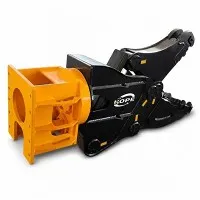
The hydraulic shear is a demolition and rescue tool centered on hydraulic drive technology. It executes cutting operations by utilizing a piston rod to control the opening and closing of its blades. The main body is constructed from high-strength steel and aerospace-grade aluminum alloy, and is equipped with hot-rolled, forged steel blades, thereby combining the attributes of lightweight design with exceptional structural strength. This tool is primarily deployed in scenarios involving traffic accidents, fires, and earthquakes; it is capable of severing vehicle bodywork, steel rebar, security doors and windows, as well as other metal and non-metal structures. Consequently, it serves as a core piece of equipment for fire departments, traffic police, and emergency rescue agencies.
Since the late 20th century, this tool has undergone continuous optimization in tandem with advancements in hydraulic technology, incorporating precision guide rail systems and motorized back-gauge designs to enhance cutting accuracy. Newer models feature push-button controls and quick-connect hydraulic couplings; certain variants boast a cutting force reaching up to 119 tons, capable of severing round steel bars with a diameter of 40 mm. In recent years, specialized excavator-mounted "eagle-beak" shears have been developed; these units utilize a closed-box steel plate structure and hydraulic cylinders to amplify cutting force, while also advancing toward intelligent operation through the integration of infrared obstacle avoidance, solar power modules, and safety monitoring systems. The ongoing technological evolution of this tool continues to meet the demands of engineering rescue operations, with its application scope expanding to include scenarios such as the dismantling of end-of-life vehicles and ship demolition.