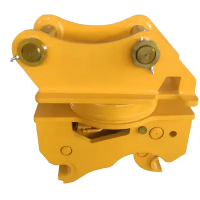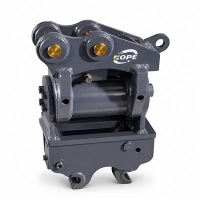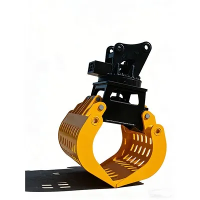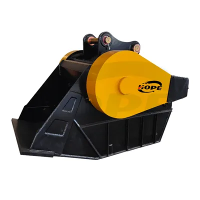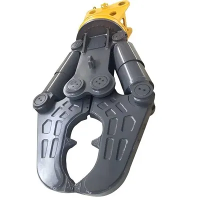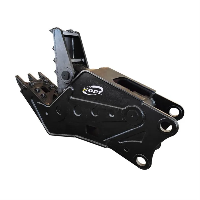
Based on their shape, excavator grapples can be classified into two types: clamshell grapples and orange-peel grapples. The former consists of two complete bucket-shaped components, while the latter is composed of three or more jaws. Based on their drive mechanism, they fall into two major categories: hydraulic grapples and mechanical grapples.
In terms of operational characteristics, excavator grapples are further divided into two types: rotating and non-rotating. Non-rotating grapples utilize the existing hydraulic circuit of the excavator's bucket cylinder, thereby requiring no additional hydraulic valve blocks or piping. Rotating grapples, conversely, require the installation of a dedicated set of hydraulic valve blocks and piping for control.
Excavator grapples are equipped with an integral opening and closing mechanism-typically driven by hydraulic cylinders-which is why grapples composed of multiple jaws are also commonly referred to as "hydraulic claws." A hydraulic grapple consists of various components, including hydraulic cylinders, buckets (jaws), connecting posts, bucket ear plates, ear bushings, bucket teeth, and tooth bases.
Welding constitutes a critical stage in the manufacturing process of hydraulic grapples; the quality of the welding directly determines both the structural integrity and the service life of the grapple.