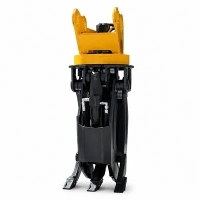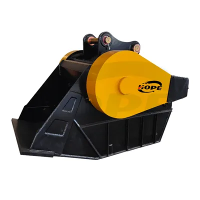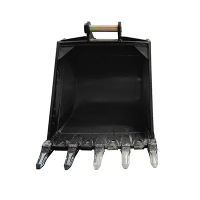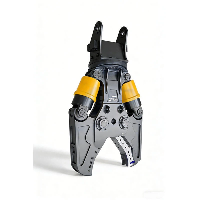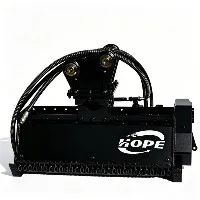
A grab (English: grab) is a specialized handling tool used by cranes to grasp dry bulk cargo; classified as a bucket-type component within the mechanical engineering sector, it is typically manufactured from manganese steel. It consists of two or more openable and closable jaws that form a containment space, utilizing steel wire ropes to control the grasping and releasing of materials. Characterized by high handling efficiency and reduced labor intensity, it serves as a primary piece of equipment for handling dry bulk cargo in ports.
Structurally, grabs can be categorized into clamshell grabs and orange-peel grabs. Based on the type of cargo handled, they are classified into ore grabs, coal grabs, grain grabs, timber grabs, and others; furthermore, depending on the bulk density of the material being grasped, they are divided into three classes: light-duty, medium-duty, and heavy-duty. In terms of drive mechanism, they fall into two categories: hydraulic and mechanical. Hydraulic grabs utilize hydraulic cylinders to actuate the jaws and are suitable for use with equipment such as excavators and tower cranes; mechanical grabs rely on external forces for actuation, primarily taking the form of two-rope grabs and single-rope grabs. Based on the number of jaws, they are classified as two-jaw grabs or multi-jaw grabs; while two-jaw grabs are the most commonly used type, multi-jaw grabs are recommended for handling large lumps of ore, iron shavings, and scrap steel. Additionally, there is the scissor-type grab, which operates on the principle of a scissor mechanism; its grasping force increases progressively as the jaws close, and-compared to standard grabs-it features a wider jaw opening and covers a larger surface area of the material, making it particularly effective for clearing material yards and ship holds.
Grabs are widely utilized for the loading and unloading of materials such as ore, coal, timber, and scrap steel, playing a pivotal role in various settings including port terminals, mining operations, and steelworks. In the pulp and paper industry, grabs are also employed within unmanned, continuous hydraulic grab systems. Routine maintenance requires a primary focus on monitoring wear on the pins and cutting edges; proper lubrication, preventive maintenance, and timely component replacement are essential for extending the service life of the equipment.