

Hey there! As a supplier of Mechanical Quick Hitches, I've gotten tons of questions about the speed of attachment and detachment. It's a crucial factor for many construction and excavation projects. In this blog, I'll break down what affects these speeds and how our products can make a difference.
First off, let's talk about why speed matters. In the construction industry, time is money. Every minute spent swapping out attachments is a minute not spent on actual work. That's where a high - speed Mechanical Quick Hitch comes in handy. It can significantly reduce the downtime between different tasks, allowing your machines to stay productive for longer periods.

Factors Affecting Attachment and Detachment Speed
Design of the Quick Hitch
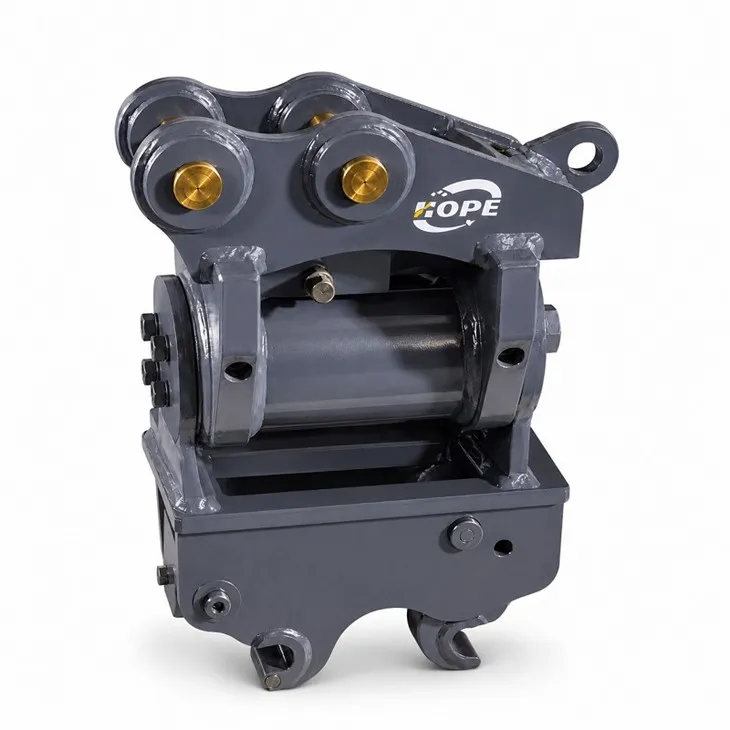
The design of a Mechanical Quick Hitch plays a huge role in how fast you can attach and detach an attachment. A well - designed hitch will have simple and intuitive locking mechanisms. For example, our hitches are engineered with a straightforward pin - and - hole system. This makes it easy for operators to align the attachment with the hitch and secure it in place quickly.
In contrast, some older or poorly designed hitches might have complex locking systems that require multiple steps and a lot of manual adjustment. This not only slows down the process but also increases the risk of operator error.
Operator Skill
Another important factor is the skill of the operator. An experienced operator who is familiar with the Mechanical Quick Hitch can attach and detach attachments much faster than a novice. That's why we provide comprehensive training and user manuals with our products. We want to make sure that every operator can use our hitches efficiently.
Condition of the Equipment
The condition of both the hitch and the attachments also affects the speed. If the hitch is dirty, worn out, or damaged, it can take longer to attach and detach. Regular maintenance is essential to keep the hitch in top - notch condition. We recommend cleaning the hitch after each use and inspecting it for any signs of wear or damage.
Our Mechanical Quick Hitches and Their Speed
Our Mechanical Quick Hitches are designed with speed in mind. We've spent years researching and developing the best locking mechanisms to ensure quick and easy attachment and detachment.
When it comes to attachment, our hitches have a self - aligning feature. This means that the attachment can be easily guided into the correct position, reducing the time spent on alignment. Once the attachment is in place, the locking mechanism engages quickly, securing the attachment firmly.
For detachment, our hitches have a simple release mechanism. With just a few easy steps, the operator can disengage the attachment and move on to the next task. This quick release feature is especially useful in situations where you need to switch attachments frequently.
Comparing with Other Types of Quick Hitches
There are other types of quick hitches in the market, such as Hydraulic Quick Hitch, Rotating Quick Coupler, and Tilt Quick Coupler. While these hitches have their own advantages, our Mechanical Quick Hitches offer a unique combination of speed, simplicity, and reliability.
Hydraulic Quick Hitches, for example, rely on hydraulic systems to operate. While they can be very powerful, they also require more complex maintenance and can be more expensive. Our Mechanical Quick Hitches, on the other hand, are mechanical in nature, which means they are less prone to hydraulic failures and are generally more cost - effective.
Rotating Quick Couplers and Tilt Quick Couplers add additional functionality, such as the ability to rotate or tilt the attachment. However, these additional features can sometimes slow down the attachment and detachment process. Our Mechanical Quick Hitches focus on providing a fast and efficient way to swap attachments without sacrificing reliability.
Real - World Applications
In real - world construction and excavation projects, the speed of attachment and detachment can have a big impact. For example, in a large - scale excavation project, you might need to switch between different types of buckets, breakers, and other attachments multiple times a day. With our Mechanical Quick Hitches, you can do this quickly and efficiently, keeping your project on schedule.
In a demolition project, time is of the essence. You need to be able to swap out attachments like hammers and shears rapidly to keep the demolition process moving. Our hitches can help you achieve this, allowing you to complete the project faster and more cost - effectively.
How to Maximize the Speed of Attachment and Detachment
To get the most out of our Mechanical Quick Hitches, here are some tips:
- Proper Training: Make sure your operators are well - trained on how to use the hitch. Our training materials can help them learn the correct procedures and techniques.
- Regular Maintenance: Keep the hitch clean and well - lubricated. Inspect it regularly for any signs of wear or damage and replace any worn parts promptly.
- Organize Attachments: Keep your attachments organized and easily accessible. This will reduce the time spent looking for the right attachment.
Conclusion
The speed of attachment and detachment with a Mechanical Quick Hitch is a critical factor in the construction and excavation industry. Our Mechanical Quick Hitches are designed to provide fast, reliable, and cost - effective attachment and detachment solutions. Whether you're working on a small - scale project or a large - scale construction site, our hitches can help you save time and money.
If you're interested in learning more about our Mechanical Quick Hitches or are looking to purchase one for your project, don't hesitate to get in touch. We're here to answer any questions you might have and help you find the right hitch for your needs.
References
- Construction Equipment Handbook
- Industry reports on excavation and construction machinery efficiency


