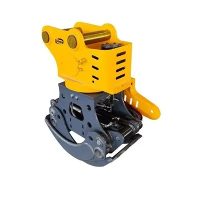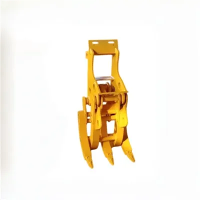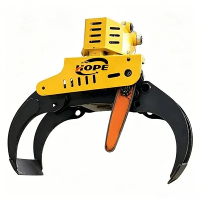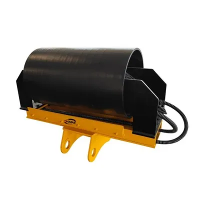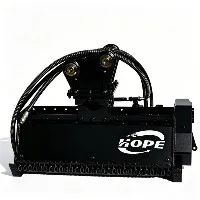
Grapple operators must be in good physical health, free from any illnesses or physical impairments that would hinder their work. They are required to undergo professional training and pass a qualifying examination before being authorized to operate the equipment. Operators must fully understand the equipment's performance capabilities and operating procedures, and be thoroughly familiar with the operating principles, structural components, performance characteristics, and adjustment methods for all adjustable parts of both the grapple and the host machine. Before starting operations, operators must verify that all indicators are displaying normally; that the levels of cooling water, fuel, engine oil, and hydraulic fluid-as well as the lubrication levels of all moving parts-meet the specified requirements; that all connecting joints are securely fastened; that all instruments are functioning correctly; and that all safety protection devices are complete, functional, and reliable.
The travel speed of the grapple carrier must be determined based on the condition of the ground surface and the degree of swing exhibited by the grapple bucket. Excessive swinging of the grapple bucket is strictly prohibited; the tips of the bucket teeth should be kept as close to the ground as possible. The host machine must be parked on level, firm ground, ensuring that the vehicle body remains in a generally level and stable position. During operations, the host machine's crawler tracks must be aligned parallel to the centerline of the excavation trench; any lifting or tilting of the tracks is impermissible. Furthermore, the entire slewing radius of the machine must be kept free of any obstructions. Prior to commencing work, the operator must thoroughly assess the trench's vertical alignment (plumbness), depth, and geological strata conditions to confirm the feasibility of using the grapple for excavation. The mast's limit protection device must not be removed or disabled arbitrarily. Blind excavation, hazardous operations, or forceful "ram-and-grab" maneuvers are strictly prohibited. When lowering the grapple into the trench, the descent must be slow and steady to prevent damage to the guide walls and to ensure the safety of the grapple itself. The level of the slurry within the trench must not be allowed to drop more than 0.5 meters below the top elevation of the guide walls; if a significant loss of slurry is observed, operations must cease immediately, and the host machine must be withdrawn from the trench.
When operating a wire-rope-actuated grapple utilizing a heavy drop-weight, the weight must first be lowered to the bottom of the trench to fully tension the wire rope, at which point a reference mark should be placed on the rope. The timing of the impact braking action must be determined based on this reference mark; premature braking-which would cause the drop-weight to "miss" its target and potentially damage the host machine-is strictly prohibited. Operators must constantly monitor the winch drum to prevent the wire rope from becoming tangled or snapping. Should the wire rope become tangled or break, operations must cease immediately so that the rope can be properly re-spooled or replaced.
Adjustments to the hydraulic system pressure must be executed in strict accordance with the methods and specifications outlined in the equipment's instruction manual; arbitrary alteration of pressure values is prohibited. Once the pressure settings have been properly adjusted, the corresponding locknuts must be securely tightened. Unauthorized manipulation or turning of the handles on various hydraulic control valves is strictly forbidden. During the disassembly and transport of the grab bucket, the bucket body must be positioned in the fully open state to ensure the piston rod is retracted into the hydraulic cylinder, thereby preventing damage to the cylinder. Upon removal, hydraulic oil lines must be sealed using pre-prepared threaded plugs; the ingress of any foreign matter into the hydraulic piping is strictly prohibited.
Strengthen daily and periodic maintenance of the equipment, adhering to prescribed procedures when replenishing coolant, hydraulic fluid, engine oil, or lubricants. Regularly inspect wire ropes, pulley assemblies, and all connection points, and diligently maintain operational maintenance records.