We have watched more and more contractors park the excavator at the gate and walk a skid steer through the door instead - and once the skid is on site, the question becomes what else it can do besides move dirt. The answer most crews land on is a skid loader mounted breaker: turn the same compact machine into a concrete and asphalt breaking tool without bringing in a larger excavator that the job site may not even fit. For tight urban work, that one addition changes what one machine crew can get through in a day.
Product Overview
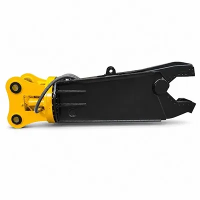
A skid loader mounted breaker is a hydraulic hammer built specifically to match the flow and pressure of skid steer loaders, not a scaled-down excavator hammer bolted on. It bolts onto the standard skid steer mounting plate, taps into the machine's auxiliary hydraulics, and turns the compact carrier into a breaking unit for concrete slabs, asphalt, rock and frozen ground. The value is not in the hammer alone - it is in the carrier that carries it: narrow footprint, four-wheel maneuverability, the ability to turn within its own length, and a quick-mount system that swaps the bucket for the breaker in minutes rather than hours.
Applications
- Small interior and urban demolition. Indoors, between buildings, on retrofits where the street is narrow - the skid steer goes through the gate the excavator cannot.
- Road repair and patching. Breaking out damaged asphalt or concrete patches on road shoulders, parking lots and driveways, then switching back to the bucket to load the debris in the same shift.
- Foundation trenching and utility work. Breaking up frozen or hard ground along trench lines before the trencher or backhoe opens the cut.
- Landscaping and site prep. Removing old footings, boulders and hardpan where hand tools are too slow and an excavator is overkill.
On every one of these jobs, the breaker is one attachment among several - bucket, broom, auger, forks - and the skid steer earns its keep by switching between them without a second machine.
Key Features
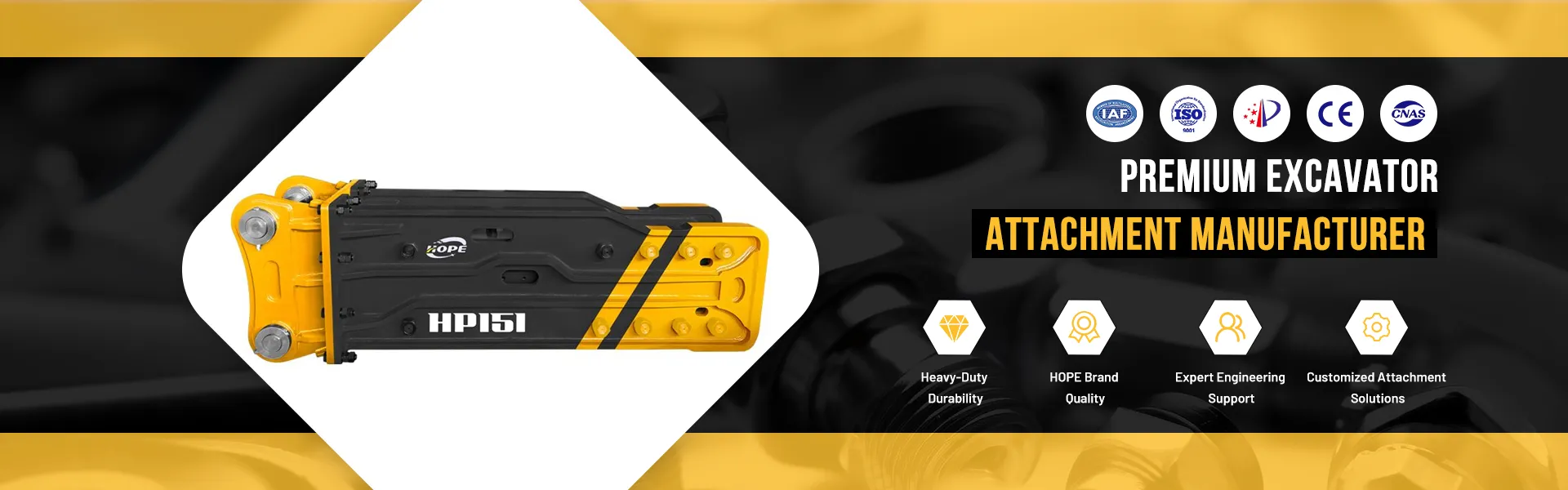
The breaker itself is built for the work skid steers actually do. A fully enclosed heavy-duty shell cuts vibration during operation, which protects both the skid steer and the operator behind the cage, and keeps dust and grit away from the internal parts for a longer service life. The piston and chisel are hardened alloy steel, so they take continuous heavy impacts without cracking or wearing down quickly. Installation needs no special tools and no machine modifications - the standard skid steer mounting system goes on and comes off fast, and the simple overall structure keeps daily maintenance to what a crew can do between jobs. Every unit is inspected before delivery.

The practical test for sizing is simple: match the breaker's required flow and pressure to what your skid steer actually delivers, and match the breaker's weight to what the lift arms can comfortably carry. Get those two right, and the breaker works the way it should; get them wrong, and either the underpowered carrier or the overpowered hammer becomes the bottleneck.
The crews that make the switch usually say the same thing afterward: they stopped hauling a second machine to small jobs. A skid steer with a bucket moves the material, and the same machine with a hydraulic breaker fitted back on the plate breaks the slab - one operator, one carrier, attachments swapped in the yard between tasks.That is the real reason the skid steer breaker has become the default for tight sites: it does not replace the excavator on big jobs. It replaces the decision to bring one at all.