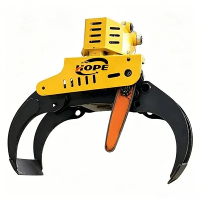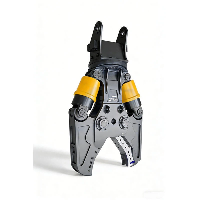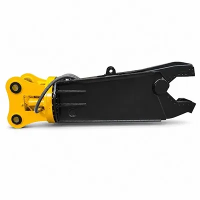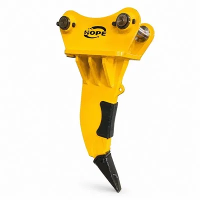
Based on their operating conditions and functions, excavator buckets are further categorized into earthmoving buckets, rock buckets, ripper buckets, trenching buckets, screening buckets, grapples, cleaning buckets, and tilting buckets.
Earthmoving Buckets: Generally used for light-duty applications, such as excavating clay and loading sand, soil, or gravel. Featuring a large bucket opening and a spacious loading surface, they boast a high fill factor; this saves operating time and ensures high efficiency.
Rock Buckets: Designed for heavy-duty operations, such as excavating soil mixed with hard rocks, medium-hard stones, or weathered rock, as well as loading solid rock or blasted ore. Constructed from high-strength, wear-resistant steel, they offer superior digging performance and exceptional cost-effectiveness.
Ripper Buckets: Used for construction operations involving hard or frozen ground. Typically equipped with a single or multiple sharp teeth, they easily penetrate and break up the soil.
Trenching Buckets: Suitable for excavating trenches of various shapes. They allow for the trench to be formed in a single pass without the need for subsequent trimming, resulting in high operational efficiency.
Screening Buckets: Designed for excavating and separating loose materials-performing both tasks simultaneously. They are widely utilized in municipal projects, agriculture, forestry, water conservancy, and earthworks.
Grapples: Designed for vertical grabbing operations. They are suitable for excavating foundation pits and deep trenches, as well as loading loose materials such as coal, sand, mud, and gravel. They are particularly effective for excavation or loading tasks within trenches or confined spaces.
Cleaning Buckets and Tilting Buckets: Ideal for leveling and trimming surfaces (such as slopes), as well as for high-capacity dredging and cleaning of riverbeds and drainage ditches. The tilting bucket variant features a hydraulic cylinder that allows the bucket's angle to be adjusted, thereby significantly enhancing work efficiency.