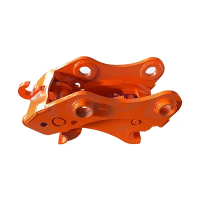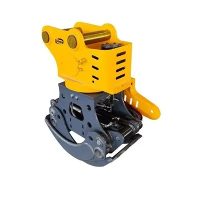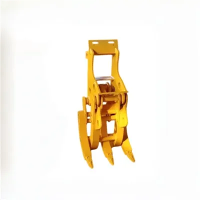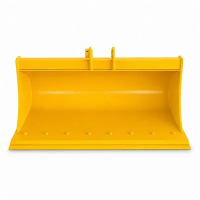
A common failure mode encountered during grab operation is abrasive wear. Analysis of relevant data reveals that, among the various forms of grab failure, approximately 40% of performance losses are attributable to wear on the pins and shafts; about 30% result from wear on the bucket cutting edges; and the remaining 30% stem from wear on pulleys and damage to other components. Consequently, enhancing the wear resistance of the grab's pins and bushings-as well as that of the bucket's cutting edges-constitutes two critical strategies for extending the grab's service life. The factors influencing material wear can be broadly categorized into external and internal factors.
External factors include load, sliding velocity, and the hardness and geometry of the abrasive particles. Internal factors encompass the material's chemical composition, carbide type, and microstructure. The nature of these external factors is self-evident, and thus they will not be enumerated individually here. To extend the grab's service life, it is essential to select specific wear-resistant materials tailored to the distinct conditions of each wear-prone component, and to complement these choices with appropriate processing techniques; this approach significantly enhances the grab's overall durability.
Given the intensive usage of grabs-often compounded by varying levels of operational proficiency among ship unloader operators-the failure rate for these devices tends to be high. Therefore, during routine daily inspections, particular emphasis must be placed on examining these critical components. Concurrently, rigorous maintenance procedures must be implemented for these areas to maximize the grab's service life and boost overall productivity.
To optimize grab management, safeguard production operations, and ensure workplace safety, the following regulations have been established based on the personnel structure, scope of work, and operational procedures involved in the use, maintenance, and repair of grabs:
The Shift Supervisor shall promptly schedule the daily lubrication of the grab. Additionally, lubrication of the grab's upper crossbeam assembly shall be scheduled for every Monday and Thursday. In the event of exceptional circumstances, a postponement of up to one day is permissible; however, such instances must be recorded in the Shift Log, and the Shift Supervisor on duty the following day shall be responsible for making alternative arrangements for the scheduled lubrication.
Operators performing lubrication tasks must adhere to established standards to ensure adequate lubrication. If lubricant cannot be successfully injected into a specific point, this issue must be recorded immediately and reported to the inspection personnel or the supervising technician. Operators are required to maintain a detailed record of every lubrication event within the Operational Log.
When performing lubrication tasks, operators shall actively accept and act upon the guidance and observations provided by the designated Grab Lubrication Inspector. d. During operation, the operator must take precautions to prevent accidents-such as the grab bucket striking the ship's hold-and strictly eliminate the occurrence of similar incidents resulting from improper operating techniques.
The operator shall continuously monitor the condition of the grab bucket throughout the operation. If signs of wear are detected on components such as chains or quick-release couplings, lubrication must be applied immediately. If any other malfunctions-or suspected malfunctions-are identified, operations must be halted immediately for inspection, the issue reported promptly, and a corresponding entry recorded in the operational log.
Inspection personnel shall ensure the timeliness, accuracy, and effectiveness of grab bucket inspections to facilitate better planning for the replacement and repair of the equipment.
Any malfunctions-or suspected malfunctions-identified during inspections must be reported immediately to the Grab Bucket Supervisor and duly recorded in the inspection and repair log.
Upon the removal of a grab bucket from active service, inspection personnel shall record all existing issues within the Grab Bucket Management Ledger, affix their signature, and promptly submit the ledger to the Grab Bucket Supervisor.
During holidays and non-working days, technicians are required not only to verbally brief the duty personnel regarding the status of the active grab bucket but also to record any specific precautions or points of attention in the duty log. Duty personnel, in turn, must record the specific details and the remedial actions taken for any malfunctions that occur during their shift in the duty log.
For every major overhaul of a grab bucket, the Grab Bucket Repair Team must compile comprehensive statistics (including repair items, duration of repair, difficulties encountered, and a summary of materials consumed). A designated statistician shall be assigned to this task, and all data must be recorded in the Grab Bucket Management Ledger.
The Grab Bucket Management Ledger shall accompany the grab bucket itself, ensuring that real-time records are maintained throughout its operational and repair cycles. Upon the completion of any repairs, the Grab Bucket Supervisor shall inspect and formally accept the work by signing the ledger.
The Grab Bucket Supervisor shall maintain up-to-date statistics regarding the condition of all spare grab buckets and promptly update records regarding the replacement of critical components. Should any repairs require work to be performed directly on the active equipment (while installed), the Supervisor must notify the supervising technician in advance.
When performing repairs at the terminal, grab bucket repair personnel must maintain constant communication with the Grab Bucket Supervisor. Furthermore, should any repair activities require coordination with terminal-side equipment or operations, the Grab Bucket Supervisor must be notified in advance.
When repairing a grab, if component replacement is required, the principle of interchangeability must be adhered to. Furthermore, if the replacement process involves the assembly of other grab components (including repairs performed by the terminal's fitter team), every effort should be made to avoid disrupting their original assembly configuration.
During the repair process, the person in charge of the repair shall supervise the repair personnel to ensure safety, and the repair personnel shall comply with the instructions of the person in charge. Priority must be placed on ensuring repair quality and eliminating the need for rework. For repairs conducted at the terminal, work orders must be issued and closed out in a timely manner.