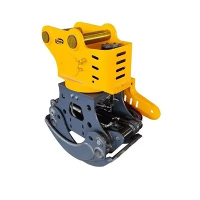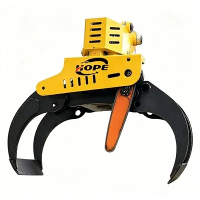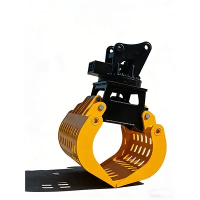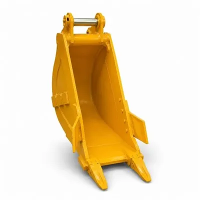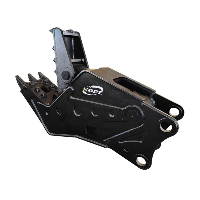
A hydraulic shear is the fastest way to cut steel on a demolition or scrap yard site - and the easiest way to waste money is to buy the wrong one. The mistake is rarely the machine itself; it is the tool-to-job match. A shear built for a 10-ton excavator hung on a 40-ton machine will stall on thick beams. A "do-everything" attachment that tries to crush concrete as well as cut steel usually does neither well. Here is how to get the match right, in six checks.
Know what the tool is for - and what it is not for
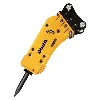
A hydraulic shear is a steel-cutting tool. Its job: H/I beams, factory support columns, end-of-life vehicle frames and dense scrap piles - material that needs a blade to slice through, not a jaw to crush. Concrete is a different job entirely, and that is what a pulverizer or breaker is built for. Using a steel shear on concrete nicks the blades, overloads the cylinder and slows the whole cycle. Decide your primary material before you look at any spec sheet.

Match the shear to your excavator's weight class
This is the filter that eliminates most options. Shears are sized for the machine that carries them, because cutting force comes from the excavator's hydraulic flow and pressure. A 5–10 ton excavator needs a compact shear like the HP60 (530 kg, 40/60/80 t cutting force); a 45–60 ton machine can carry the HP560 (6000 kg, 150/190/260 t). Put a shear too big for the carrier and the hydraulics cannot drive it; put one too small and you leave cutting capacity on the table while the frame takes loads it was never designed for.
Confirm hydraulic compatibility before you commit
The best shear is useless if it does not match your excavator's hydraulic system. Standard machines should be able to run the attachment with no custom modifications, no extra parts. Check the required driving pressure against your machine's output (the HOPE range runs 180–350 kg/cm² depending on model, with cycle times from 4–7 seconds on the HP60 to 15–20 seconds on the HP560) and confirm the flow rate is sufficient for the cutting force you expect. Ask the supplier for the exact mounting and hydraulic specs for your excavator model before ordering.
Choosing a hydraulic shear for your excavator comes down to three numbers - machine weight, cutting force and jaw opening - plus one question: how fast can you change the blades? Get those right, and the shear becomes the highest-output attachment in your fleet, not the one that sits waiting for the wrong job.