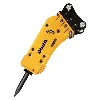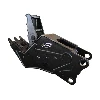
What a clamp saw is
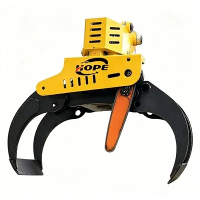
A clamp saw combines two tools in one unit: a hydraulic clamping jaw and a circular saw blade, mounted on an excavator from about 5 to 18 tons. The jaw does the holding, the blade does the cutting, and one hydraulic connection runs both. It is purpose-built for tree felling, log cutting and wood processing - not for demolition steel, not for concrete. One attachment, one job family, done well.

How it works, step by step
The sequence looks simple, and that is the point. First, the hydraulic jaw opens wide - on the HOPE models, up to 1200 mm - and wraps around the trunk or log. Second, the jaw closes and clamps down firmly. This grip is what makes a clean cut possible: with the wood held rigid, it cannot shift, roll or kick as the blade bites, even on uneven ground where a loose log would otherwise move mid-cut. Third, the 700 mm circular saw blade rotates into the cut. Because the material is locked in place, the blade travels through cleanly and consistently. Finally, the operator lifts the cut piece and moves to the next tree - grab, hold, cut, go.
If your work involves taking down trees or cutting logs to length, the question is not whether you need a saw - it is whether you want the person cutting to be beside the blade or in the cab. A clamp saw answers that by design: grab the trunk, hold it steady, cut it clean, move on. For crews on excavators from 5 to 18 tons, it turns tree work into a one-attachment job.