

Hey there! As a supplier of hydraulic breakers, I often get asked about how these powerful tools actually work. So, I thought I'd take a moment to break it down for you in a way that's easy to understand.
The Basics of a Hydraulic Breaker
First off, let's talk about what a hydraulic breaker is. It's an attachment that you can put on heavy - machinery like excavators, backhoes, and skid loaders. These breakers are used in a bunch of different industries, from construction and mining to demolition. They're super useful for breaking up hard materials like concrete, rock, and asphalt.
We offer a wide range of hydraulic breakers, including the Backhoe Type Integral Hydraulic Breaker, Top Type Integrated Breaker, Box Type Hydraulic Breaker, Skid Loader Type Hydraulic Breaker, and Side Type Hydraulic Breaker. Each type is designed for specific applications and machinery, but they all operate on the same basic hydraulic principle.
How Hydraulic Systems Work
To understand how a hydraulic breaker works, you first need to know a bit about hydraulic systems in general. Hydraulics is all about using a fluid, usually oil, to transfer power. The key idea behind hydraulics is Pascal's Law. This law says that when you apply pressure to a confined fluid, that pressure is transmitted equally in all directions.
In a hydraulic system, you have a pump that pushes the hydraulic fluid into a cylinder. Inside the cylinder, there's a piston. When the high - pressure fluid enters the cylinder, it pushes the piston. This movement of the piston can then be used to do work, like moving a heavy object or, in the case of a hydraulic breaker, delivering a high - impact blow.
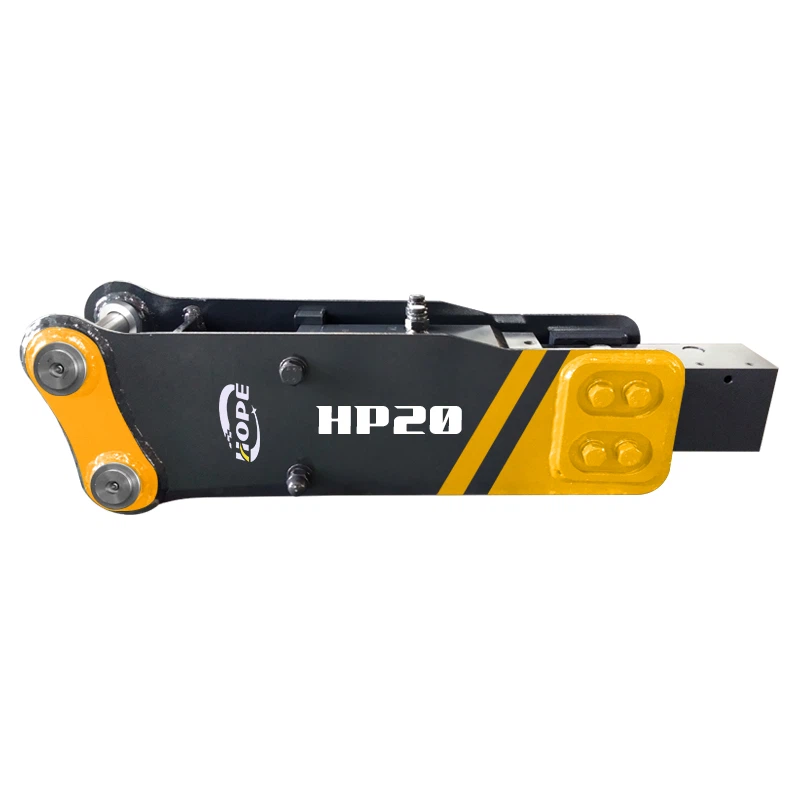

The Components of a Hydraulic Breaker
A hydraulic breaker has several key components that work together to make it function:
- The Cylinder: This is where the hydraulic fluid is used to create movement. It's like the engine room of the breaker. The cylinder houses the piston and provides the space for the fluid to build up pressure.
- The Piston: The piston is a crucial part. When the hydraulic fluid enters the cylinder under pressure, it pushes the piston forward. This forward motion is what generates the force needed to break the material.
- The Chisel or Tool: This is the part that actually comes into contact with the material you're breaking. It's designed to be strong and durable, and different types of chisels are used depending on the job. For example, a pointed chisel is great for breaking up hard rock, while a flat chisel is better for concrete.
- The Valves: Valves control the flow of the hydraulic fluid. They open and close at the right times to ensure that the fluid goes where it needs to go and that the piston moves in the right direction.
The Working Cycle of a Hydraulic Breaker
Now, let's go through the working cycle of a hydraulic breaker step by step:
- Filling the Cylinder: The process starts when the hydraulic pump sends high - pressure fluid into the lower part of the cylinder. As the fluid fills the lower part, it creates pressure, which starts to push the piston upwards.
- Compression Phase: As the piston moves up, it compresses the nitrogen gas (which is usually stored in the upper part of the breaker). This stored energy in the compressed nitrogen will be used later to increase the power of the blow.
- Reversing the Flow: Once the piston reaches a certain point, the control valves reverse the flow of the hydraulic fluid. Now, the high - pressure fluid is sent to the upper part of the cylinder.
- Downward Stroke: The high - pressure fluid in the upper part, along with the expansion of the compressed nitrogen gas, forces the piston to move downwards very quickly. This downward motion is extremely powerful, and it transfers the energy to the chisel.
- Breaking the Material: When the piston strikes the chisel, the chisel then strikes the material, like concrete or rock. The force of the impact is enough to break the material into smaller pieces.
- Resetting the Cycle: After the blow, the cycle resets, and the whole process starts over again. The control valves adjust the flow of the fluid, and the piston moves back up to start the next compression phase.
Advantages of Hydraulic Breakers
There are several reasons why hydraulic breakers are so popular in the industry:
- High Power: Hydraulic breakers can deliver a lot of force. The combination of hydraulic pressure and the stored energy from the compressed nitrogen makes them extremely powerful for breaking tough materials.
- Precision: You can control the speed and force of the blows. This means that you can use the breaker for different types of jobs, from light demolition to heavy - duty rock breaking.
- Versatility: As I mentioned earlier, we have different types of hydraulic breakers for different machines and applications. Whether you're using a small skid loader or a large excavator, there's a breaker that will fit your needs.
- Efficiency: Hydraulic breakers work very quickly. They can break up materials much faster than traditional methods, which saves time and money on the job site.
Factors Affecting the Performance of a Hydraulic Breaker
The performance of a hydraulic breaker can be affected by several factors:
- Hydraulic Oil Quality: The quality of the hydraulic oil is crucial. If the oil is dirty or has the wrong viscosity, it can affect the pressure and flow of the fluid, which in turn will impact the performance of the breaker.
- Machine Compatibility: It's important to make sure that the hydraulic breaker is compatible with the machine it's attached to. The machine needs to be able to provide the right amount of hydraulic power for the breaker to work properly.
- Maintenance: Regular maintenance is key to keeping the breaker in good working condition. This includes things like checking the hydraulic hoses for leaks, lubricating the moving parts, and replacing worn - out components.
Why Choose Our Hydraulic Breakers
As a hydraulic breaker supplier, we take pride in offering high - quality products. Our breakers are built with the latest technology and are made from durable materials. We understand the importance of performance and reliability on the job site, so we make sure that our products meet the highest standards.
Whether you need a small breaker for a light - duty job or a large, powerful one for heavy - duty demolition, we have the right solution for you. Our team of experts is always available to help you choose the best breaker for your specific needs.
Let's Talk!
If you're in the market for a hydraulic breaker, don't hesitate to reach out. We're more than happy to discuss your requirements, answer any questions you may have, and provide you with a quote. Contact us today to start the conversation about how our hydraulic breakers can take your projects to the next level.
References
- Fluid Power Handbook, edited by various industry experts.
- Construction Equipment Magazine, numerous articles on hydraulic attachments.


