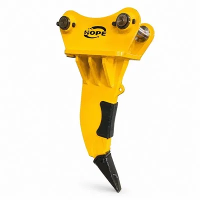
We ship both kinds of attachments from our workshop - breakers and pulverizers - so we hear the same question on almost every inquiry: which one does the job better? The short answer is that they do different jobs, and the mistake most contractors make is buying the breaker out of habit when the hydraulic pulverizer would pay for itself faster on the same site. Here is the difference, in terms you will recognize from your own project list.
What a breaker actually does
A hydraulic hammer strikes. It delivers repeated impact energy to break concrete - fast, loud, and effective at reducing slabs and footings to rubble. But striking is all it does. The rebar is still in there, bent and tangled. The rubble still has to be sorted, and a breaker has no hand in that. On a demolition site, the breaker finishes its work and you are still standing in the middle of the cleanup.

What a pulverizer adds in one pass
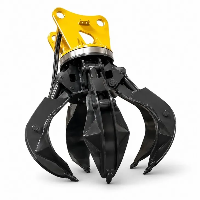
A pulverizer does not just strike - it grips, crushes and shears. Two hardened jaws close on a beam or slab, crush the concrete down, and the built-in cutting action takes the rebar out in the same motion. That is the difference that shows up in the timecard: concrete comes out as clean rubble, rebar comes out straight and cut, and material separation starts before you even leave the building. Add the rotating head and you can line the jaw up with the crack without swinging the whole excavator around - which matters a lot on a tight urban demolition lot.
When we tell customers to pick each one
Choose a breaker when the work is primary demolition only, the site is open, and sorting happens elsewhere. Choose a pulverizer when rebar has to come out, concrete is going back as aggregate, or the site needs to stay quiet and clean. Most demolition contractors end up owning both - but if the budget stretches to one attachment, and the site involves concrete plus steel, the pulverizer is the more versatile purchase.
The choice comes back to one question: is your job finished when the concrete is broken, or when it is sorted and recycling-ready? If it is the former, a breaker does it fast. If it is the latter - and most demolition and recycling contracts are the latter - the rotating demolition pulverizer does both jobs in one attachment, on one machine, with one operator. Pair it with the right carrier size from the four-model range, and the same excavator that pulled up to the building leaves with concrete separated, rebar cut, and the site already cleaned. That is the conversation we have on nearly every inquiry - and it is why the attachment most contractors end up using is the one they almost bought only for "the first phase."